Workhuman Forum Paris 2026
The only thing changing is everything
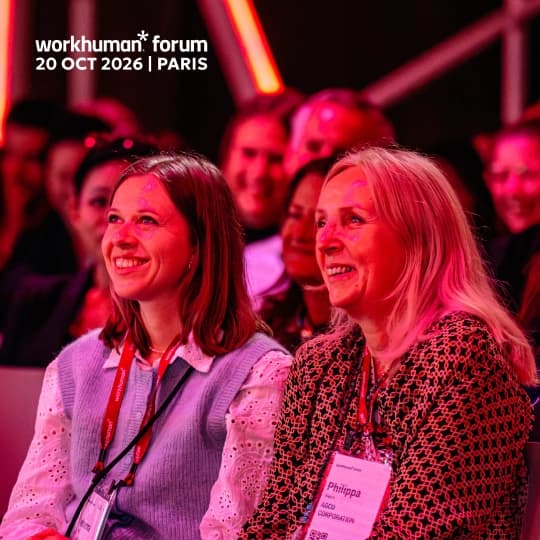
On 20 October, more than 300 senior HR and business leaders came together at the Paris Convention Centre for Workhuman Forum Paris 2026 to explore one central question: how do organisations continue to adapt, perform and grow when change itself has become constant?
Across an afternoon of keynotes and conversations, one message came through clearly: the organisations best equipped for the future will be those that combine new technology with stronger human leadership, better intelligence and the ability to adapt with agility.
Humanising leadership to grow through change
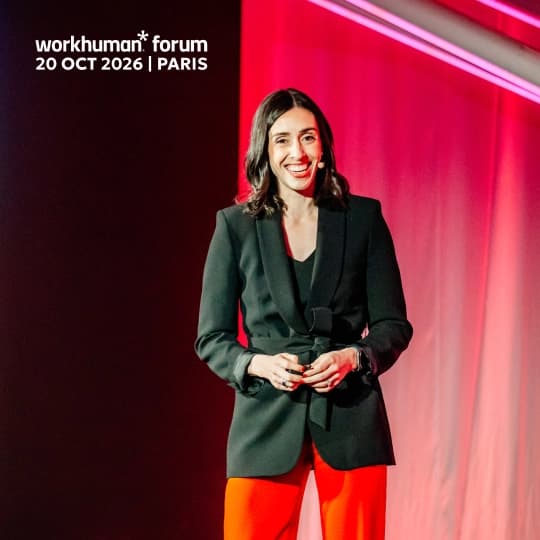
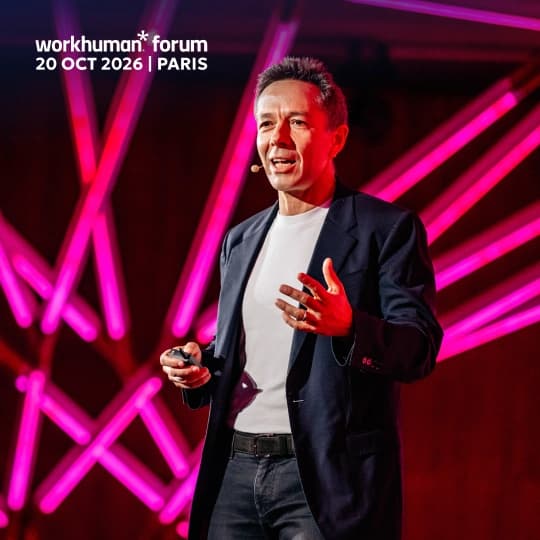
Gianpiero Petriglieri, Associate Professor of Organisational Behaviour at INSEAD
In an energetic opening keynote, Gianpiero Petriglieri distilled two decades of research into the simple truths behind great leadership and why they matter even more in times of uncertainty.
His focus was the human side of leadership: how leaders remain grounded, purposeful and credible while organisations evolve around them. His central idea was that leadership is a form of commitment, bringing together courage and care to help people face uncertainty and grow towards the future together.
The human signals shaping the next era of work
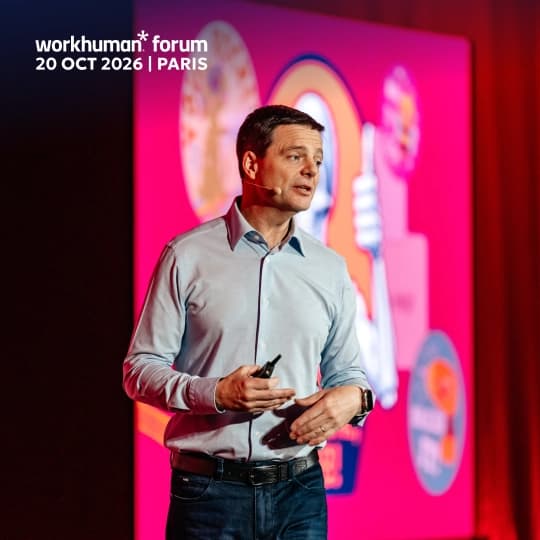
Eric Mosley, Founder, CEO & Board Member, Workhuman
Eric Mosley turned the conversation to how organisations can better understand what is really happening inside their workforce.
As AI becomes increasingly accessible, competitive advantage will depend less on access to technology and more on understanding the human capabilities around it. Yet many organisations still have an incomplete picture of where critical skills sit, who is demonstrating leadership potential or how work really gets done.
Recognition can help close that gap. It gives organisations a way to reinforce the behaviours and capabilities that support business outcomes, while generating human signals that give HR deeper insight into skills, contribution, relationships and emerging leadership potential.
The change-capable organisation
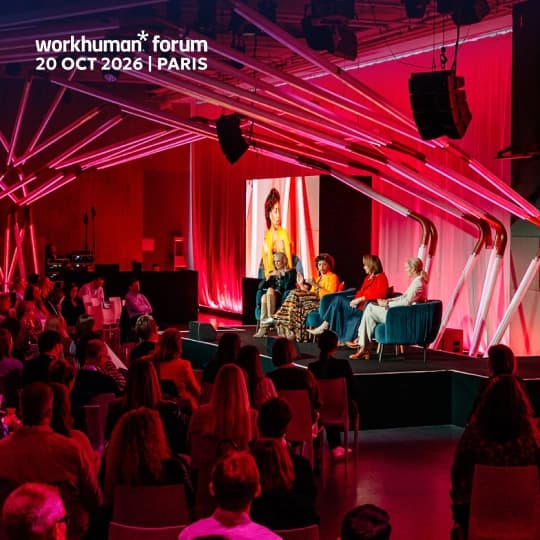
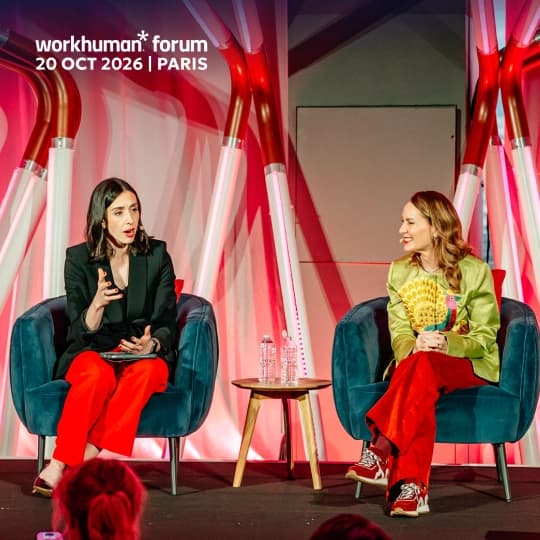
Wendy Bounds, WSJ Leadership Institute
Anne van Dassen Müller, Stolt-Nielsen
Amanda Poole, Bristol Myers Squibb
KeyAnna Schmiedl, Workhuman
The afternoon moved from theory into practice with a conversation about what it takes to lead organisations through sustained transformation.
One of the strongest themes was the changing role of HR. As AI reshapes work, HR can no longer simply translate business strategy into people plans after the fact. People leaders increasingly need to help shape that strategy from the outset, working alongside business and technology leaders to redesign work, develop critical capabilities and decide where people and AI can create the greatest value.
The group also dove into the importance of effectively identifying employees with leadership potential, and also doing the work to nurture those people to give them the greatest chance of success. As we continue the conversation about trust and resilience in times of change, we need to ensure our future leaders are ready for the challenge.
The discussion was also highly practical. Amanda Poole shared how Bristol Myers Squibb uses a “rule of three” to help employees focus on their most important contributions, while her HR team reduced a pipeline of 323 planned projects by around 40%. It was a powerful reminder that HR does not just manage complexity, it can also create it.
The wider message was clear: AI makes human capability more important, not less. Judgement, adaptability, communication and strong management remain essential to making transformation work.
Where transformation breaks or builds
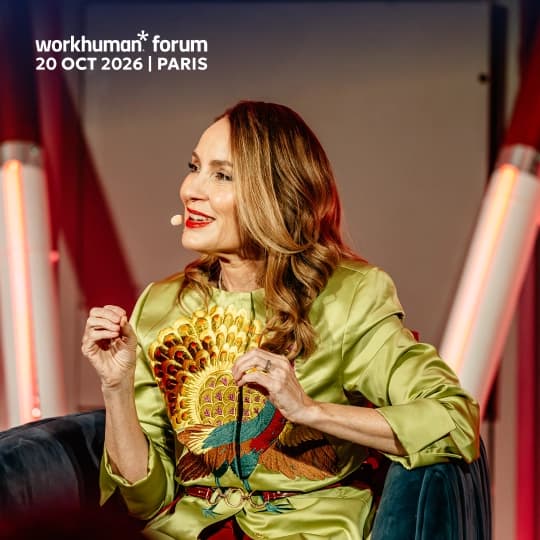
Dr. Susan David, Leading Management Thinker, Bestselling Author & Award-Winning Psychologist, Harvard Medical School
The final main-stage conversation explored the emotional side of change.
Drawing on personal experiences of grief and uncertainty, Susan David argued that resilience does not come from avoiding difficult emotions. It comes from developing the agility to understand them, work with them and continue moving forward.
A central theme was that the AI revolution is also a human skills revolution. As employees absorb more change, leaders need to understand what sits beneath broad labels such as “stress”. Emotions are data, not directives: they can reveal when people feel unsupported, unseen or uncertain, but they do not have to determine what happens next.
For leaders, that means becoming more skilled at navigating emotion without being overwhelmed by it. Self-compassion, courage and emotional nuance are becoming increasingly important capabilities for helping people move through uncertainty.
The takeaway
Across four very different sessions, a common idea emerged.
Technology will continue to change how work gets done, but transformation ultimately depends on people: how they lead, adapt, make decisions, understand one another and respond to uncertainty.
For HR, that creates both a challenge and an opportunity. The function has the chance to move closer to the centre of business strategy, helping organisations redesign work, uncover the human capabilities they already have and build the resilience needed for whatever comes next.
More great content from Workhuman
Upcoming events
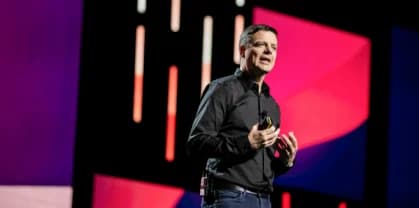
From global conferences to virtual webinars, we bring together the ideas and voices shaping the future of work.
Get the details
Our platform
Explore the most comprehensive solution to build a work culture that fuels your company goals.
Learn more
Humans at Work Barometer Report
Organizations are performing, but people are under pressure. The 2026 Humans at Work Barometer presents new global data on recognition, AI readiness, manager capacity, and the contributions that go unseen every day.
Read the report